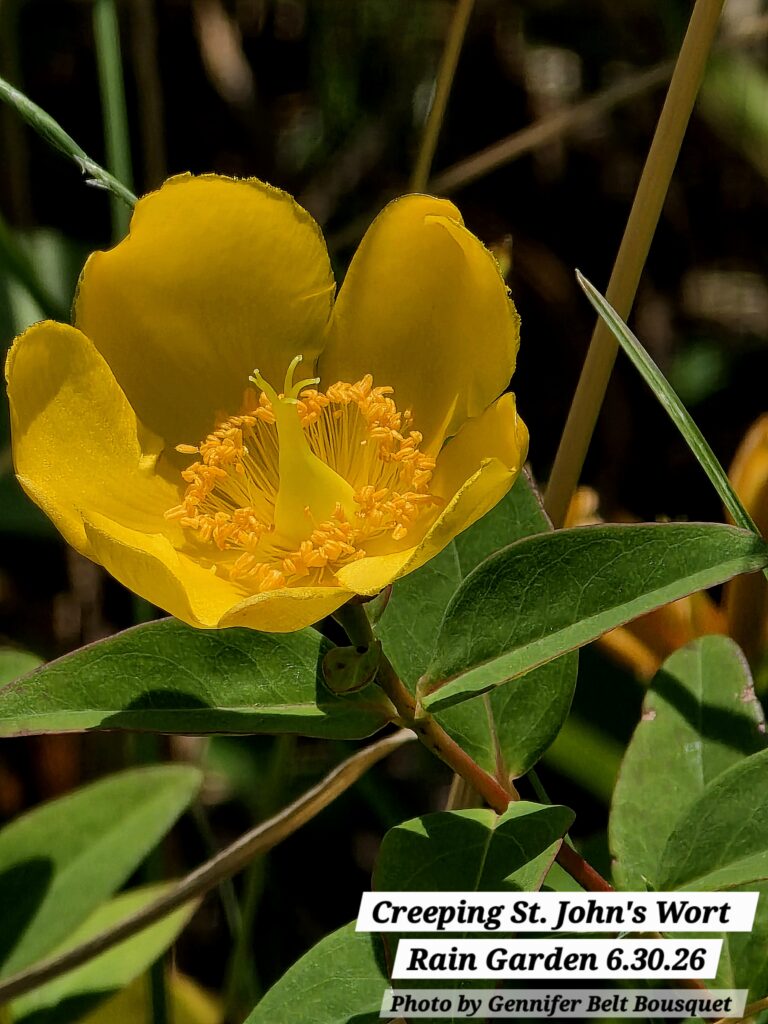
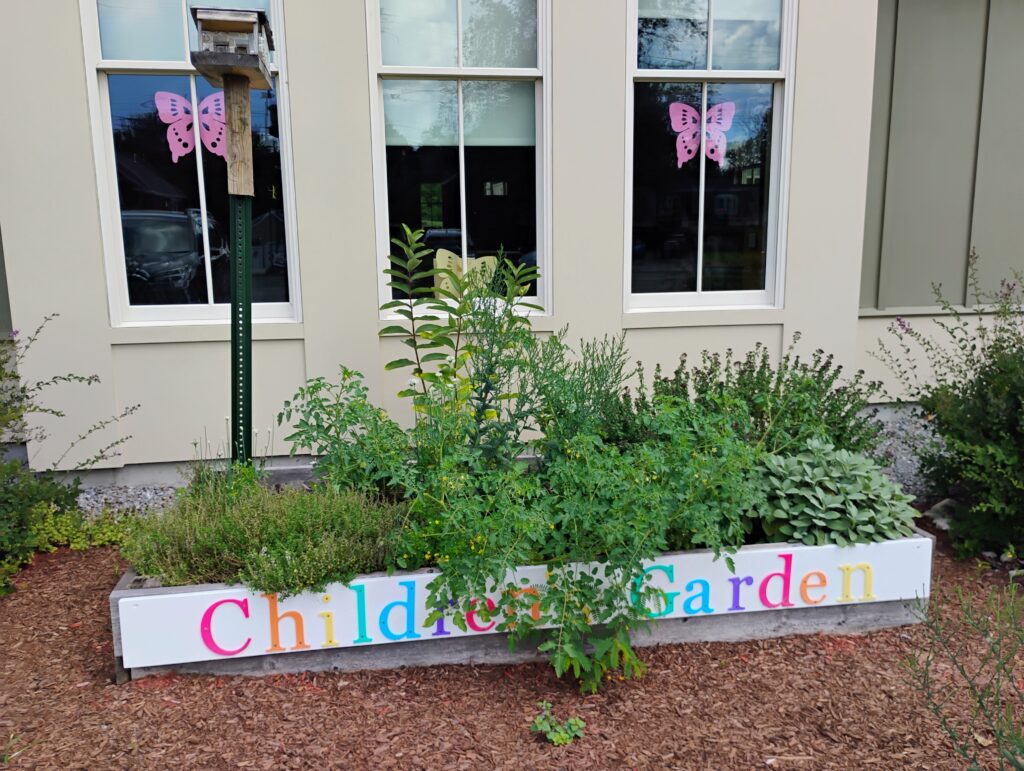
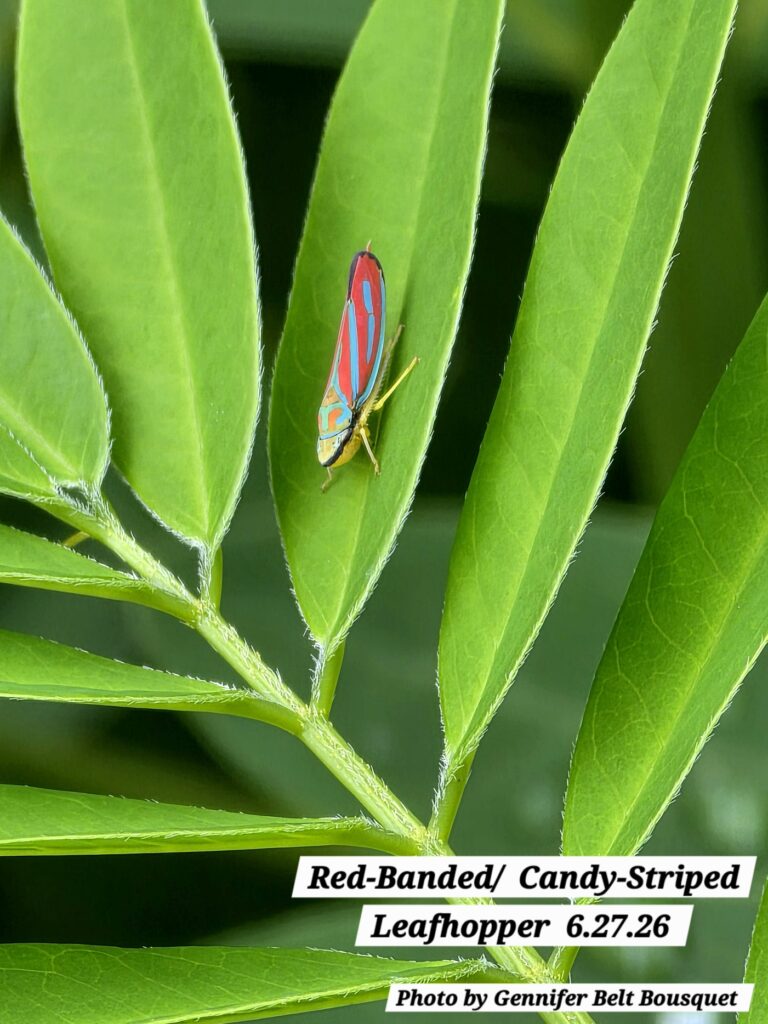
The Lunenburg Public Library isn’t just a place for readers and a gathering spot for people—it’s also a community center for hundreds of fascinating, non-human visitors! Take a closer look… You never know who you might meet!
This Week’s Visitor
Hoverfly (Family Syrphidae)
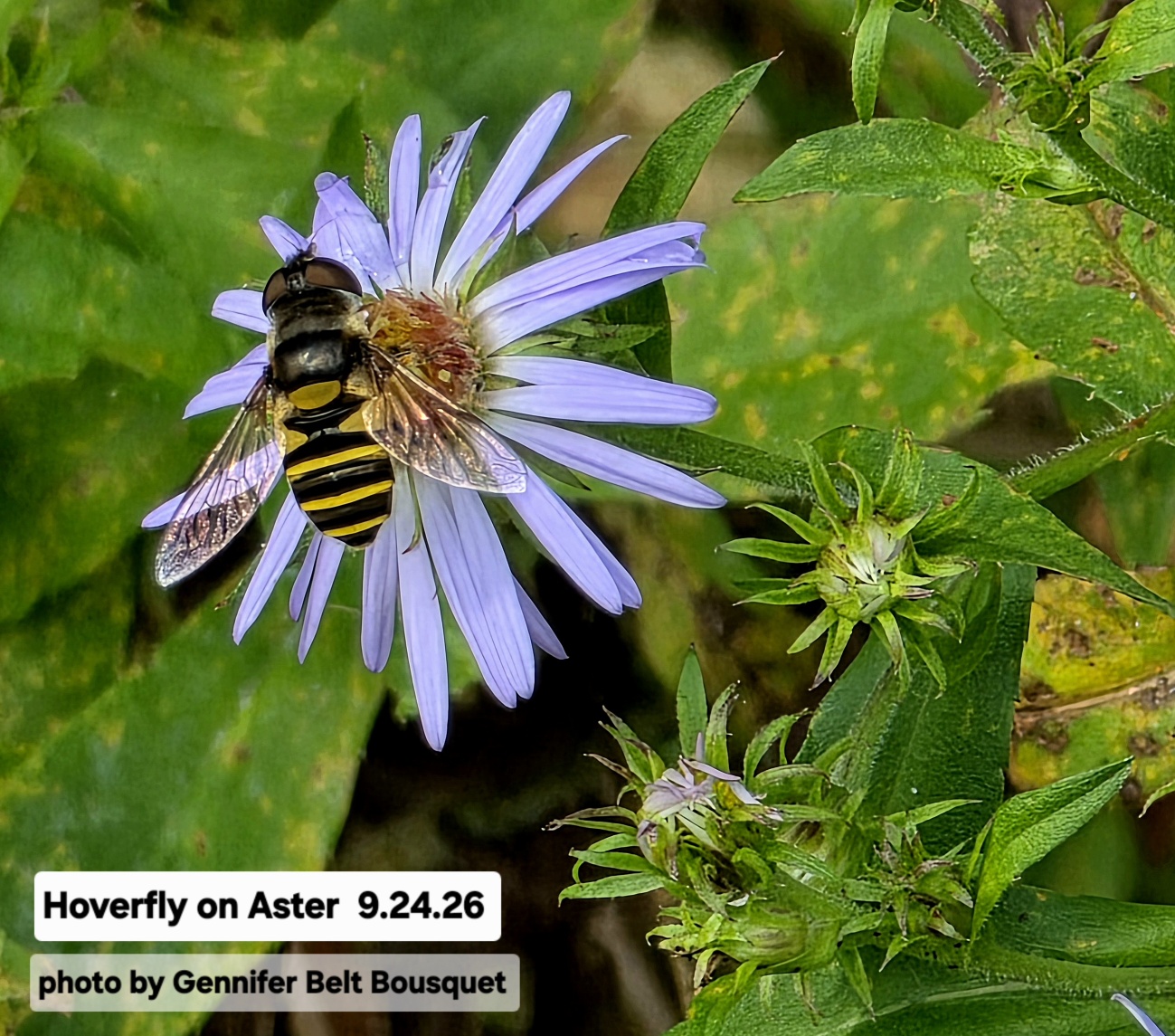
Believe or not, this is not a bee… It’s a fly! The hoverfly is an important pollinator and the larvae of some hoverflies eat small garden insects, such as aphids.
Library Status: Frequent summer and fall visitor
Favorite Section: Asters and other nectar-rich flowers
Checks Out: Nectar for energy and pollen for protein
Superpower: Fancy flight! A hoverfly can hover in one place like a tiny helicopter.
Borrowed Knowledge: The hoverfly’s yellow-and-black markings are a form of camouflage called “Batesian mimicry.” Masquerading as a stinging insect helps it avoid being eaten.
Can you find one of these clever little mimics in our early autumn gardens?
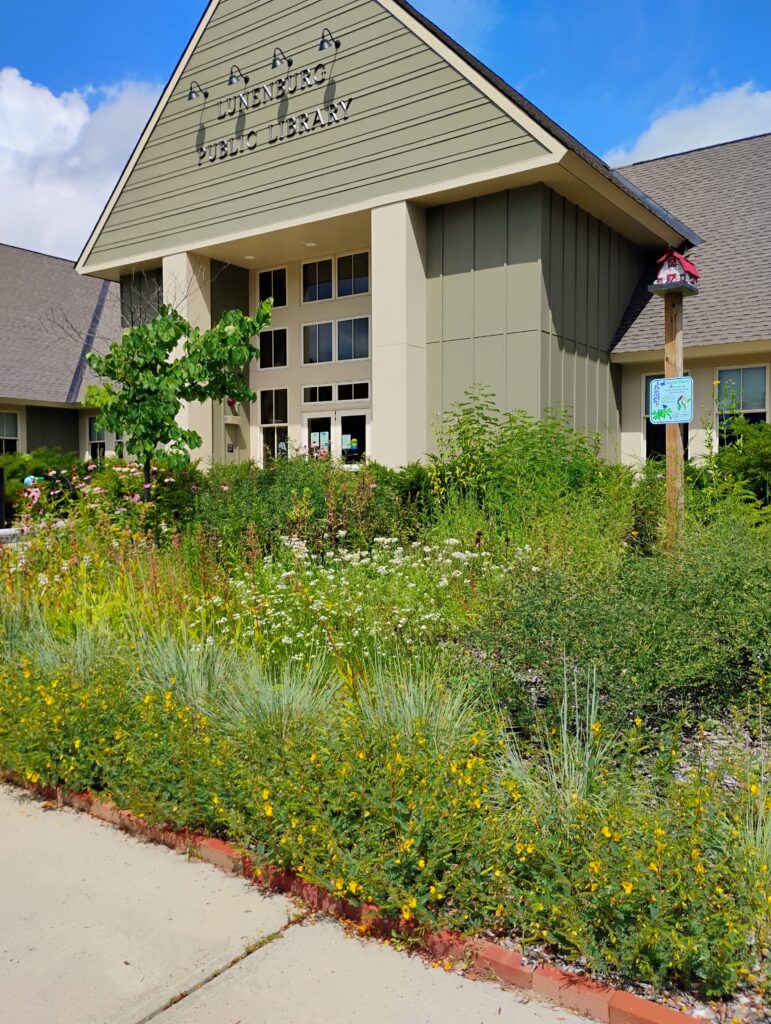
Who Else Is Visiting the LPL?
The gardens surrounding the library provide food, shelter and nesting opportunities for native bees, moths, butterflies, beetles, flies, wasps, birds and many other wildlife throughout the year.
When you visit, imagine the remarkable story unfolding around you. Native plants and wildlife have evolved together over thousands of years, forming relationships that help each other survive. Every flower, leaf, seed, and visiting creature is part of that story. Together, they keep our local ecosystems healthy.
How to Explore the Gardens
You can get quite close to many of the flowers if you walk on the sidewalk, children’s path, and gravel walkways between the gardens and building.
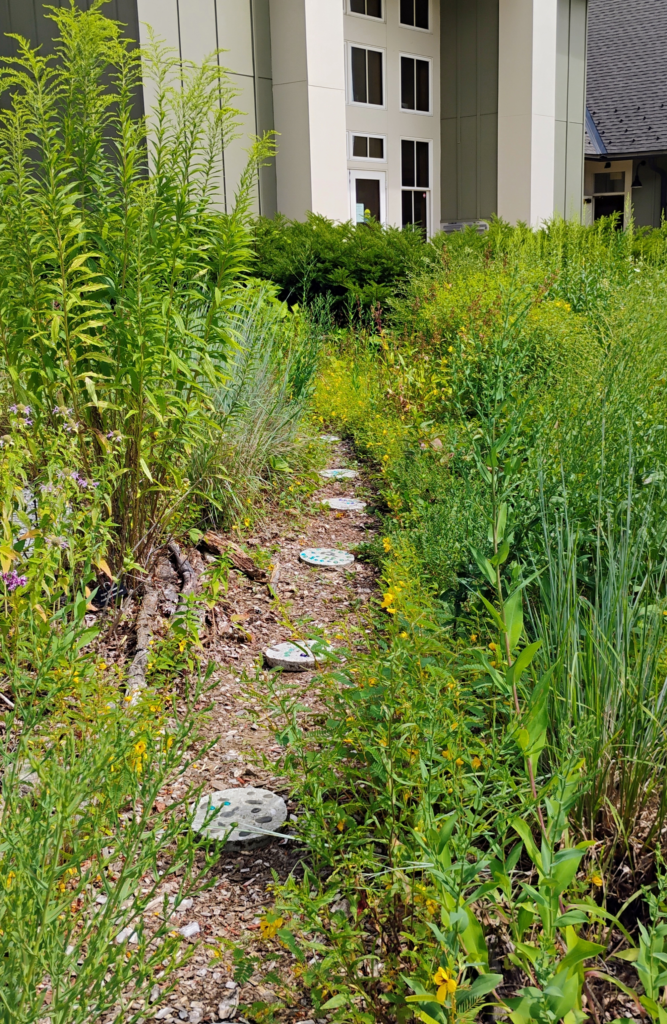
As you explore:
- Look closely at flowers and leaves before moving on. Do you spot a visitor?
- Are there clues that someone has been there? Maybe the edge of a leaf has been nibbled or a leafcutter bee has cut a perfect round circle out of a smooth leaf.
- Notice which insects prefer which plants. Are some plants “busier” than others?
- Listen for buzzing and watch for movement and flashes of color.
- Take pictures and share what you discover with library staff!
Nature rewards patience. Some of our visitors are shy, so you may have to sit quietly for a few minutes—or even return another day—to meet them.
You may also want to try visiting at different times of day to discover even more. Some creatures are early risers, while others may not become active until later in the day or at night.